The Heritage of Camel Riding in Arabia
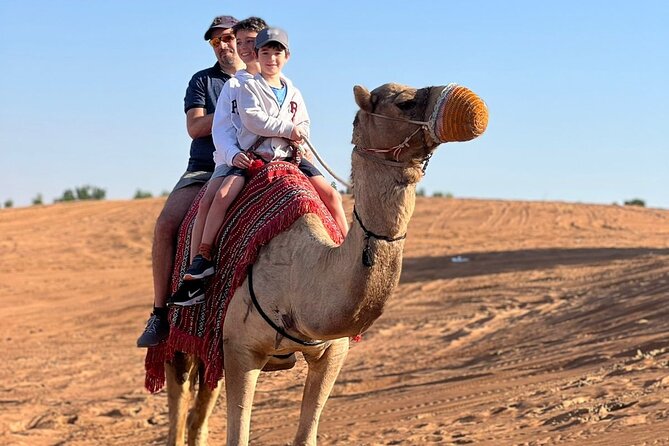
Known as the "Ship of the Desert," the dromedary camel (one-humped camel) has been central to Bedouin survival in the Arabian Peninsula for thousands of years. On an Abu Dhabi evening desert safari, camel riding offers guests a direct connection to traditional Emirati heritage inside the authentic desert camp environment.
Included as part of your standard evening safari ticket, guided camel rides take place along dedicated sand trails surrounding the Bedouin campsite, allowing guests to experience the gentle rhythm of camel travel against the backdrop of glowing sunset dunes.
What to Expect During the Camel Ride
Camel riding on a safari is structured as a guided, low-speed experience suitable for guests of all ages and fitness levels:
1. Mounting and Standing Up
The camel rests on its knees on soft sand while guests mount the padded saddle. Hold onto the wooden handle pegs firmly. When the camel stands up, it raises its hind legs first, leaning your body forward, before raising its front legs. Lean back slightly during the stand-up process to maintain perfect balance.
2. The Guided Dune Trail
Bedouin handlers guide the camels by lead rope along a scenic dune loop. The ride is slow, gentle, and relaxing, providing an elevated view across the desert camp and surrounding sand ridges.
3. Dismounting Safely
When the ride concludes, the camel kneels front legs first. Lean backward as the camel lowers its front knees, then lean forward slightly as the rear legs fold down onto the sand.
Camel Care and Ethical Animal Welfare Standards
Licensed desert safari operators in Abu Dhabi adhere to strict animal welfare guidelines set by local municipal authorities:
- Rest Intervals: Camels work in short rotation shifts with ample shade, water, and rest breaks.
- Proper Equipment: Soft fabric saddles and padded bridles prevent skin chafing.
- Weight Limits: Handlers monitor rider weight capacity to ensure animal comfort.
Experience Guided Camel Riding in Al Khatim
Included in all evening desert safari packages with free hotel pickup, dune bashing, and BBQ dinner.
Book Safari with Camel RideTips for Great Camel Photography
- Sunset Silhouette Shot: Position yourself below the dune ridge and photograph your companion riding the camel against the setting sun for a striking Arabian silhouette photo.
- Friendly Camel Selfies: Bedouin handlers are happy to assist in taking photos of you standing beside the camels after your ride.
- Wear Long Pants: Wearing light cotton pants prevents minor skin friction against the camel saddle blanket.
Understanding Dromedary Camel Biology and Behavior
The dromedary camel (one-humped camel) is uniquely adapted to survive in extreme desert environments like Al Khatim. Their humps do not store water, but rather up to 80 pounds of fatty tissue, which the camel metabolizes into energy and water when food is scarce. Their wide, padded two-toed feet act like snowshoes, spreading their weight to prevent sinking into soft sand dunes.
Ethical Care and Animal Welfare Guidelines
Licensed safari operators maintain high standards of animal welfare. Camels receive daily veterinary checkups, high-nutrient alfalfa feeds, and unlimited fresh water. During safari operations, camels work short 20-minute shifts with mandatory rest breaks under shaded awnings to ensure complete comfort.
Frequently Asked Questions About Camel Riding
1. Is camel riding difficult or dangerous for beginners?
Not at all! Camel rides at the safari camp are slow, guided experiences led by experienced Bedouin handlers holding lead ropes. The camels are calm, well-trained, and fitted with soft padded saddles and handle pegs.
2. How should I hold on when the camel stands up or kneels down?
When the camel stands up, it raises its hind legs first, so lean backward slightly to balance. When the camel kneels down, it lowers its front knees first, so lean backward as it folds its front legs, then upright as the rear legs fold down.
3. Are there age or weight restrictions for camel riding?
Children of all ages can ride camels alongside a parent or handler. For animal comfort, weight limits of approximately 110 kg (242 lbs) per rider are observed.
4. Do camels receive ethical treatment and proper care at the camp?
Yes. Licensed operators in Abu Dhabi follow municipal animal welfare standards. Camels receive regular veterinary care, nutrient-rich feed, daily shade rest, and work short rotation shifts.
5. What clothing should I wear for camel riding?
Wearing long light trousers or jeans is recommended to prevent skin friction against the camel saddle blanket. Avoid tight skirts or formal dresses.
Historical & Cultural Importance of the Arabian Dromedary
For centuries, the Arabian dromedary camel served as the lifeline of Bedouin tribes across the Empty Quarter. Providing milk, wool, leather, transport, and companionship, camels enabled nomadic communities to thrive in one of the harshest environments on Earth. Understanding this deep historical connection enhances your appreciation of camel riding during your desert visit.
Detailed Step-by-Step Camel Riding Etiquette
- Approach Calmly from the Front: Walk up to the camel slowly within its field of vision so the animal sees you coming. Avoid sudden movements or loud noises behind the camel.
- Grip the Saddle Pegs: Hold onto the wooden handle pegs firmly with both hands before the camel initiates its standing movement.
- Maintain a Relaxed Posture: Match the gentle sway of the camel's gait as it walks along the desert trail. Relaxing your lower back ensures a comfortable, smooth ride.
- Reward Your Camel: After dismounting, feel free to pat your camel gently on the neck under the guidance of your Bedouin handler.
Understanding Camel Anatomy and Adaptations to Desert Life
The dromedary camel possesses remarkable physiological adaptations that allow it to thrive in desert heat. Their nostrils can close completely to keep out wind-blown sand particles, while their long double eyelashes and transparent third eyelids shield their eyes during sandstorms. Furthermore, camels can adjust their body temperature from 34°C at night to 40°C during peak daytime heat, allowing them to conserve body water without sweating.
Camel Riding Photo Checklist for Visitors
- Dune Crest Standing Pose: Have your desert marshal take a wide photo of you sitting atop the camel while it stands high on a sand ridge.
- Bedouin Costume Pairing: Wear an authentic Emirati Kandura or Abaya provided at the camp photo tent during your camel ride for memorable cultural photographs.
- Morning vs. Evening Ride Lighting: Sunset camel rides offer soft golden hour glow, perfect for warm portraits.
Comments (0)
Be the first to leave a comment on this article!
Leave a Reply